

Posted on Leave a comment

Should your commercial kitchen have splashbacks for its benches?
Should your commercial kitchen have splashbacks for its benches?

Sometimes the smallest details offer the greatest rewards within a business. In a commercial kitchen where hygiene, efficiency and safety are critical, there are plenty of small details that make mean your souffle will always puff to perfection. One such detail is a stainless steel splashback addition to your bench tops.

What is a kitchen splashback?

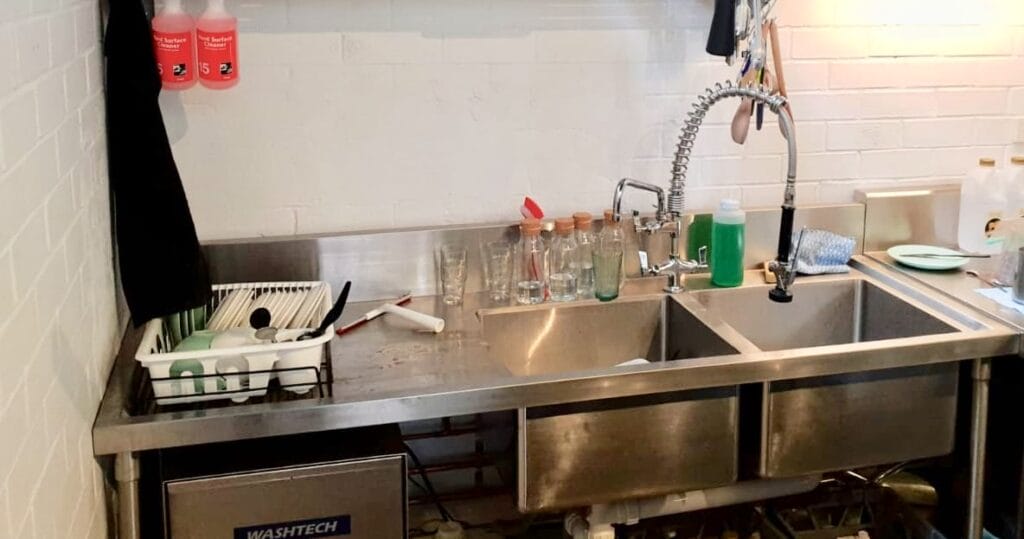
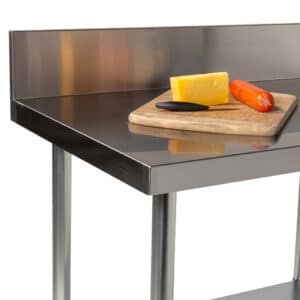
In the commercial kitchen sense, a splashback is a protective panel either attached to the work bench or installed on the wall behind kitchen worktops, sinks, stoves, and other food preparation areas. Its job isn’t just to make the space look good (that’s your job, chef!), but a far more practical nod to its name. It cleverly catches splashes from all the frantic cooking (food, oil, liquids etc), preventing them from damaging or staining the walls. Splashbacks are typically made from durable, easy-to-clean materials such as stainless steel, glass, or tiles, which are designed to withstand the high demands of a busy commercial kitchen.

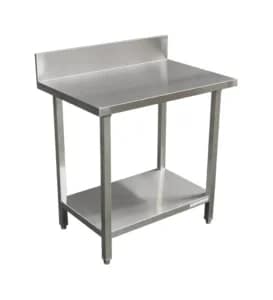
At Brayco, our bench with splashback product hits all the most wanted of a busy but efficient commercial kitchen. The Premium Stainless Steel Benches With Splashback is made from 304 stainless steel, a high quality product without an extortionate price tag.
Advantages of stainless steel kitchen splashbacks

While tiles look pretty in your residential kitchen, the practical nature of stainless steel is much more desirable for a commercial kitchen. Here’s why:

  • Hot property
    Commercial kitchens operate under high temperatures, particularly around cooking areas. Stainless steel is designed to withstand intense heat, making it the perfect material for a splashback to prevent the walls from being damaged by exposure to high temperatures. This is particularly important in areas surrounding ovens, stoves, and fryers, where heat can easily degrade walls over time.
  • Everlasting durability
    While splashbacks may provide an added expense upfront, they can save money in the long run by protecting your kitchen walls from damage and reducing the time and resources needed for cleaning. Their durability means they’ll have a long lifespan, making them a smart investment for any commercial kitchen aiming to maintain cleanliness and reduce long-term maintenance costs.
  • Hygiene is king
    In an industry where you can be shut down in a flash for unhygienic practises, cleanliness is a top priority. The smooth, non-porous surface of stainless steel kitchen splashbacks prevents food particles, grease, and moisture from seeping into walls. Cleaning at the end of the night is a breeze with a quick and thorough wipe down so bacteria won’t even get a look in.
  • Stylish and sleek
    So, it turns out we’re not above wanting to look good and even in commercial kitchens, a good looking space is nice for staff and more so, if you have an open plan kitchen that customers can see into. Stainless steel provides a sleek, modern kitchen that blends seamlessly with a professional kitchen’s aesthetic.

Maintenance of your stainless steel benches with splashback

Ain’t nothing perfect (except for Adam Brody in Nobody Wants This… IYKYK), so if we must draw you to some disadvantages of stainless steel it would have to be it takes some relatively careful maintenance.

Like all commercial kitchen appliances and structures, your bench and splashback will need regular cleaning. Wipe them down daily with warm water and mild detergent with a soft cloth or sponge. For extra sparkle, use a stainless steel polish which will reduce the grubby fingerprint or smudge marks your apprentices inevitably leave.

Avoid using any steel wool cleaners or harsh chemicals while cleaning as stainless steel can scratch easily. To protect your bench even further, consider protective rubber mats to cover heavily used benches to ward off potential scratches and dents.

If you have any stains appear from food or grease, get onto them quickly with a baking soda and water paste with a gentle sponge before rinsing and drying the stainless steel bench or splashback.

Splashback Options For Your Commercial Kitchen

As mentioned above, Brayco has a premium quality splashback stainless steel bench, but if you already have a bench, we have good news for you.

Brayco has come up with a stainless steel splashback extension so you can buy it individually and attach it to your already hardworking bench. They come in multiple sizes from 600mm to 1000mm long, so we should have your bench matched.

If we haven’t convinced you of the many, many benefits of having a stainless steel splashback bench, you are one hard nut to crack. But you like what you like, and we respect that. So, we also have Brayco’s premium stainless steel benches (minus the splashback) in 304 stainless steel in a variety of sizes for depth and length which will endure all the mashing, chopping and kneading your kitchen can throw at it.

If you need further advice or to see our spectacular benches in all their glory, come down and visit your nearest Brayco and have a yarn with our friendly staff.
Posted on Leave a comment

Client Profile – Redhill Bowling Club, SA

Client Profile – Redhill Bowling Club, SA

In regional South Australia, Redhill is a small country town with a local bowling club that provides not only a lush green lawn for a competitive pennant, it’s also the social hub where memories are made. When barefoot bowls and regular pennants are complete, the club is hired for a variety of functions and frequented by locals for weekend drinks.

Playing such an important role in the town’s social fabric meant Redhill Bowling Club needed to have a high-functioning kitchen and dining space. Before Brayco products were introduced, the Club had ageing timber cupboards that had reached the end of their lifespan thanks to the regular use.

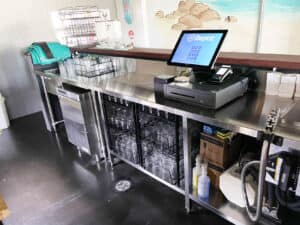
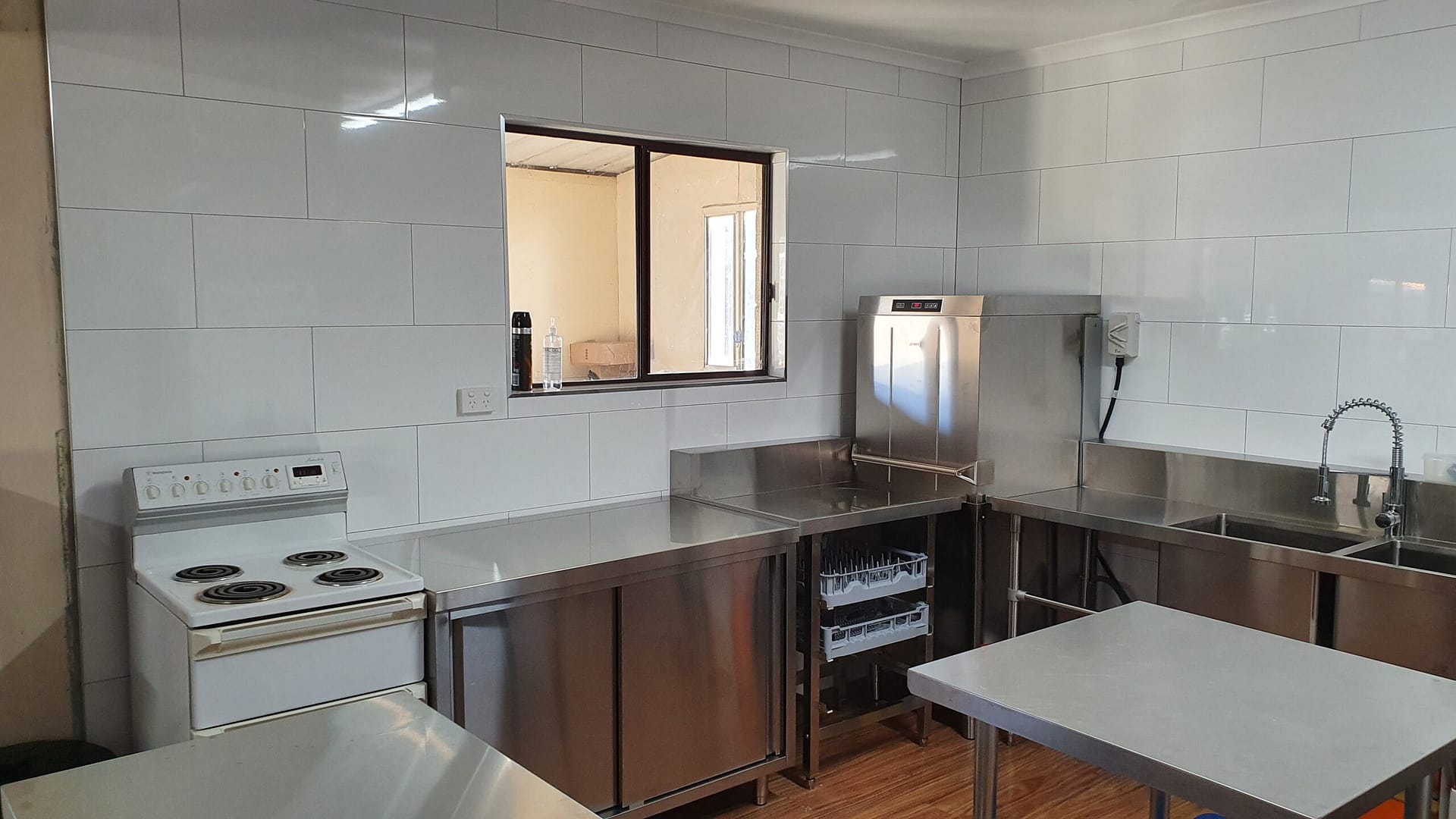
Brayco products were ideal for this community hot spot. The Club introduced Brayco stainless steel benches, basins and cabinets throughout to increase the hygiene, versatility and durability for its kitchen.

Separating the kitchen and dining area, a Brayco stainless steel commercial kitchen cabinet was introduced as an island bench that separated the kitchen from the dining zone. The cabinet is made up of a food-grade 304 stainless steel top with internal shelves and strong drawers. The Club uses it for myriad purposes from storage to food preparation, and serving food to guests.

Gone are the cluttered kitchen cupboards and in their place, sturdy and minimalistic Brayco stainless steel cabinets that provide not only long-lasting storage options with the high-quality material used, but they also create a seamless visual effect for the space. Alongside the cabinet, the Club has made clever use of the small space with a dishwasher contained within Brayco inlet and outlet benches that slide the dishracks in and out of the dishwasher with ease.

Finally, a wall-mounted handbasin creates a handy (excuse the pun) hygiene wash station for the Club members to move efficiently from the bowling green to preparing food.

If you’re interested in upgrading your commercial kitchen to a user-friendly, hygienic, and durable space like Redhill Bowling Club’s, contact Brayco today to see how we can help you improve your space.

Posted on

How to Remove Rust From Stainless Steel

How to Remove Rust From Stainless Steel

The beauty of using stainless steel in a kitchen is its durability and resistance to rust. However, over time if not regularly maintained you may find spots of rust. With the right tools and a bit of know-how, you can reverse time (or at least the rust). Here’s how to tackle those pesky orange spots and restore your sleek steel to its original shiny state.

What Causes Rust on Stainless Steel?

Before we dive into how to remove rust from stainless steel, let’s touch on why stainless steel, known for its resistance to rust, can still fall victim to it. The key is in the name: “stain-less”, not “stain-free”.

Your stainless steel bench is made up of iron, chromium and other components. It is the chromium content that gives stainless steel its corrosion-resistant properties. Discolouration caused by non-structural surface staining can appear on stainless steel due to the breakdown of the chromium oxide layer. It can be easily cleaned by following one of the following methods – though prevention is the key here. We highly recommend regular cleaning and removal of dust, and ensure you dry your bench with a clean cloth and remove any water spots.

How to Remove Rust from Stainless Steel Home Remedies?

You’ve got options, some can be found right in your very own kitchen. Always test a small, inconspicuous rusty spot on your stainless steel appliances or surfaces before moving on to larger surfaces. You want to ensure the cleaning method of your stainless steel is more of a gentle breeze than a hurricane to your shining appliances and surfaces. And always rub in the direction of the grain.
 

1. Baking Soda

Mix water with baking soda to create a paste, aiming for a consistency that won’t run off the surface. Spread this homemade rust remover over the rusted spots on your stainless steel surface. Feel free to cover the area generously.

Using a soft cloth, a soft-bristled brush, or a damp sponge, scrub the area gently. Always go with the grain of the stainless steel; think of it as petting a cat—you wouldn’t go against the fur. After a bit of scrubbing, rinse the area with water and pat it dry with a soft cloth. Voilà! You should see a significant improvement.

2. Stainless Steel Cleaner

We recommend Hillmark Steel Kleen. Follow the instructions laid out by the manufacturer of the stainless steel cleaner. These cleaners are specially formulated to tackle rust and leave behind a protective layer on the metal surface.

Apply the cleaner as directed, scrub gently with a soft cloth, and then either rinse or wipe away as instructed. The result? A rust-free surface that looks brand new.

What to Avoid When Removing Rust From Stainless Steel

Embarking on a rust-removal quest feels a bit like being a kitchen superhero. But even superheroes have to play by the rules to avoid turning their powers against them.
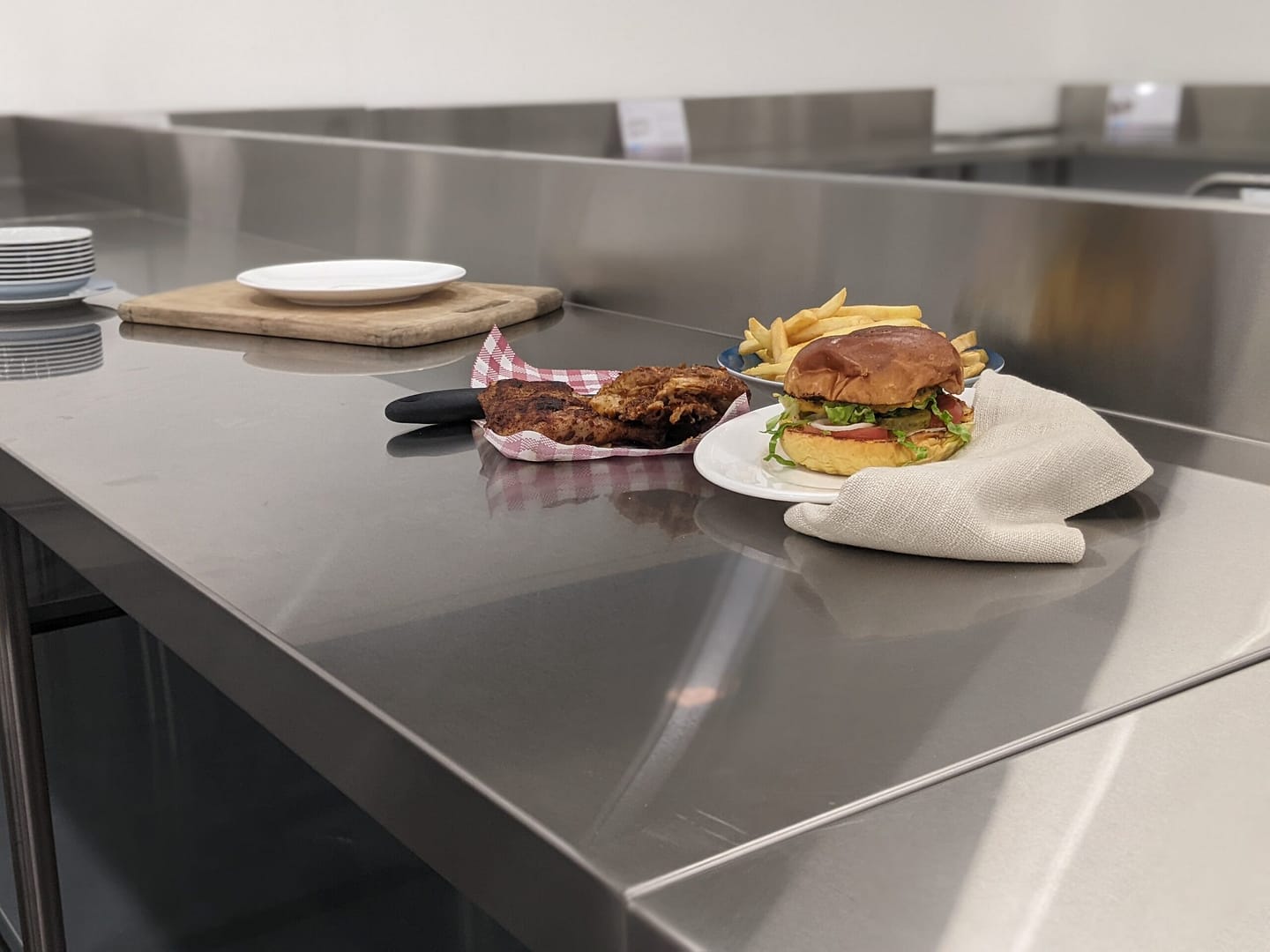
When it comes to how to remove rust from stainless steel, there are a few “villains” you’ll want to steer clear of. Let’s uncover the no-nos of rust removal to ensure your stainless steel lives happily ever after.

Harsh Chemicals: The Kryptonite

Think of harsh chemicals as the kryptonite to your stainless steel. They might promise to zap away rust faster than you can say “stainless,” but at what cost? These chemicals can damage the protective layer of your stainless steel, leaving it more vulnerable than ever. Rather than commercial rust removers, stick to the gentler, kinder methods we’ve outlined above.

Steel Wool: The Arch Nemesis

Steel wool might seem like your ally in the fight against rust, but it’s actually an arch-nemesis in disguise. Using steel wool on stainless steel is likely to cause more harm than good. The abrasive nature of steel wool or other metal brushes can scratch the surface of your stainless steel, leaving it looking worse than when you started. Opt for a soft cloth or soft bristle brush to keep the peace.

Citrus & Vinegar:

Whilst vinegar and lemon juice has been used for cleaning steel, its acidic nature can cause damage and discolouration. We recommend you steer clear of these solutions.

Bleach: The False Friend

Bleach may be a go-to for tough cleaning jobs, but when it comes to stainless steel, it’s a false friend. Not only can bleach discolour your stainless steel, but it can also lead to further corrosion. If bleach has accidentally made contact with your stainless steel, neutralise the area with a solution of water and baking soda, then rinse thoroughly.

Ignoring the Grain: The Rookie Mistake

Ignoring the grain of stainless steel while cleaning is a rookie mistake that can lead to scratches and dullness. Always clean in the direction of the grain, as if you’re gently combing the hair of a beloved pet. This keeps your stainless steel looking its best.

Forgetting Protection: The Overlooked Step

Finally, not protecting your stainless steel after rust removal is like forgetting to wear a coat in a snowstorm. Applying a layer of stainless steel polish or olive oil after cleaning not only adds shine but also provides a protective barrier against future rust.

In the realm of rust removal, knowledge is power. By knowing what to avoid, you can keep your stainless steel shining like the beacon of hope it was always meant to be. Armed with these tips and tricks, you’re now fully equipped to tackle rust while keeping your stainless steel in superhero condition.

Stainless Steel Rust FAQs

How Does Baking Soda Remove Rust?

Baking soda is an alkaline substance that neutralises acids. When rust comes into contact with the baking soda solution, it dissolves, leaving your stainless steel gleaming. It’s also mildly abrasive, so you can scrub stubborn rust without damaging your surface.

How to Remove Rust from Stainless Steel Utensils?

You can scrub your stainless steel utensils with a baking soda paste. Wipe your utensils like normal afterwards to bring back the shine.

Prevention is Key: Keeping Your Stainless Steel Gleaming

Learning how to remove rust from stainless steel is an invaluable skill. However, choosing top-grade stainless steel is the best way to prevent rust from building up in the first place. Contact us and let’s have a chat—with multiple depots across Australia and New Zealand, we can have your premium quality stainless steel ready for pick-up or dispatch within 24 hours of your order being placed.


Back to top: How to Remove Rust From Stainless Steel

Posted on

What is 304 Stainless Steel?

What is 304 Stainless Steel?

A common question: what is 304 stainless steel? Let’s dive into the world of this metal without getting too scientific. Imagine this: if stainless steel were a family, 304 would be the overachiever everyone talks about at family gatherings.

Known as 18/8 steel, this mix is not just any old blend. It’s the perfect cocktail of at least 18% chromium and 8% nickel content, whipping up a concoction of qualities that make it the gold standard.

304 stainless steel is the full package: high tensile strength, beauty, and a personality that makes it a hit in any setting. What is 304 stainless steel’s superpower? Here’s what it brings to the table:

  • Looks to Kill: With its excellent corrosion resistance and that classic stainless shine, 304 is the George Clooney of metals—ageing like fine wine and always ready for a close-up.
  • Low Maintenance: Easy to clean and simpler to maintain than a cactus. A little soap and water, 304 keeps its sparkle.
  • Welding’s BFF: While other stainless steels clash with welders, 304 is all about making connections. It’s a favourite for crafting those smooth joins.
  • Heat’s Old Flame: When things heat up, 304 doesn’t sweat. It has better heat resistance to elevated temperatures than its stainless siblings, keeping cool when the kitchen’s on fire.
  • Impervious Surface: The non-porous surface is the perfect choice for commercial kitchens with food safety in mind.
  • Class Act: Beyond its toughness, 304 brings an air of sophistication and style, proving that durability can walk hand in hand with elegance.

Why We Love 304 Grade Stainless Steel

Strong Corrosion Resistance

304 stainless steel’s chromium content makes it amazingly resistant to rust and oxidation. This means it can take on a wide variety of acidic foods, cleaners, and even the odd splash of vinegar or lemon juice like a champ. So, if you’re setting up shop in a busy kitchen, 304 is your go-to pal for counters that stay shiny and new, even when the going gets tough.

Strength and Durability

Strength and durability? 304 stainless steel has them in spades. This stuff is tough enough to handle the hustle and bustle of commercial kitchens without breaking a sweat. Think of it as the kitchen warrior that won’t dent or give up on you when you accidentally drop that heavy pot. It’s built to last, making it a wise investment for any serious kitchen setup.
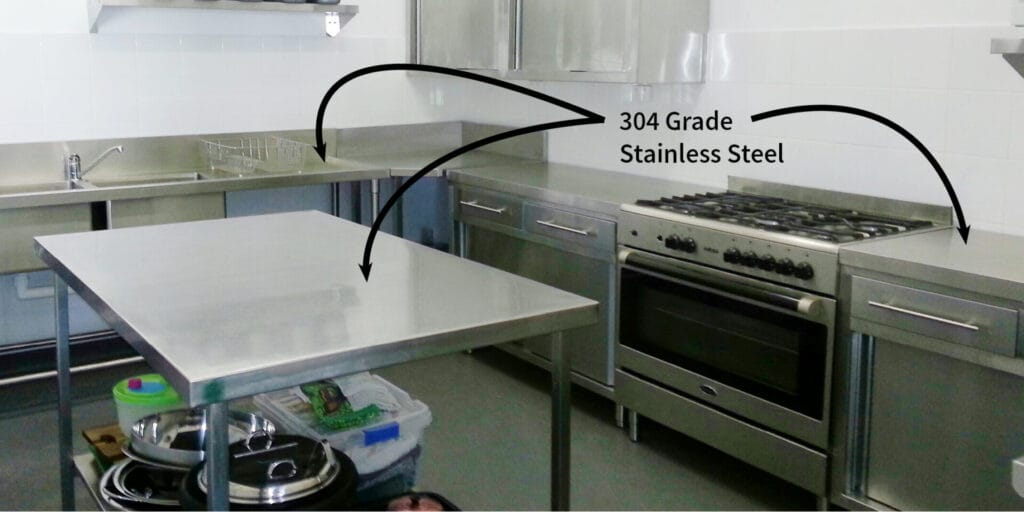
Hygiene and Cleanliness

Let’s talk about cleanliness, because in a kitchen, hygiene is non-negotiable. The non-porous surface of 304 stainless steel means bacteria and germs have nowhere to hide. A quick swipe with soap and water, and you’re good to go, keeping your kitchen spotless and your food safe.


What is 304 Stainless Steel Commonly Used For?

Being the ultimate food grade surface, 304 stainless steel can be found in every corner of our world, from the most intricate surgery tools to the bench you relax on at the park, proving time and again why it’s the MVP of metals.

  • Kitchen Equipment Commando: From gleaming appliances and chef-worthy cookware to surfaces that laugh in the face of spills, 304’s ease of cleaning and rust resistance make it the king of the culinary castle.
  • Food Processing Pro: In the world of food and drink production, 304 is the guardian of flavour and hygiene. It’s the go-to for equipment that keeps your food safe and tasting exactly as it should, all while being easy to clean.
  • Architectural Ace: Fighting off environmental corrosion like a superhero, 304 is the architect’s first choice. Building facades, stylish door frames, and sleek windows all get their enduring shine and resilience from this steel wonder.
  • Chemical Container Champ: Tanks and pipes in the chemical, dye, and paper sectors rely on 304 for its chemical resistance.
  • Automotive and Aerospace Ally: When it comes to parts that need to withstand rust and oxidation without batting an eyelid, 304 stainless steel takes the driver’s seat in the automotive and aerospace industries.
  • Medical Equipment Marvel: Sterilisable without a hint of resistance to corrosion, 304 makes the cut for medical instruments, surgical tools, medical devices and everything in the healthcare world that demands spotless sanitation.
  • Water Warrior: For water and wastewater treatment, 304’s corrosion resistance means it’s the hero of pipes, tanks, and the gear that keeps our water clean and safe.
  • Appliance All-Star: This stainless steel doesn’t just shine in commercial kitchens. From home refrigerators to industrial conveyors, 304’s versatility and durability make it the backbone of appliances big and small.

304 vs 430 Stainless Steel: What’s the Key Difference?

When comparing 304 and 430 stainless steel, it’s easy to see that their different properties make them best suited for different applications.

304 stainless steel is the more popular & durable of the two, higher in chromium (17.5% to 19.5%) and nickel (8% to 10%). This gives it some serious strength and durability, as well as giving it a higher resistance to corroding. If you need a steel to stand firm in a commercial kitchen where food hygiene is essential, this is the one you want in your corner, like a tough bodyguard.

430 stainless steel, on the other hand, is almost on par with chromium content (17%) but has almost no nickel in it at all (0 to 0.75%). It can handle mild corrosion, and it’s a good bit less expensive than 304.
But… It doesn’t quite have the same staying power and is a porous surface, so not recommended for food preparation in a commercial kitchen.

The perfect steel for you depends on where you’re using it. Need a tough, almost indestructible steel to handle food processing, medical equipment or just high hygiene environment? You can’t go wrong with 304. Want something that’ll thrive in a less harsh environment, like indoors, at home or in non-food environments? 430 should be just fine.

How to Tell the Quality of Your Steel Product

Want to play detective with your stainless steel grade? Here’s a fun party trick: grab a magnet. If it sticks, you’re likely dealing with a lesser grade, perhaps even the notorious 430. But if that magnet falls right off, give yourself a pat on the back; you’ve got high-quality 304 stainless steel.

Where Can You Find 304 Stainless Steel?

At Brayco, we’re all in on 304 stainless steel. That’s right—every bench, cabinet, shelf, and sink we offer is decked out in this premium metal. We’re throwing a stainless steel party, and you’re all invited.

Upgrade to 304 stainless steel today—your kitchen deserves the best! Say hello to unbeatable durability and hygiene. We’re here to help you every shiny step of the way.

Back to top: What Is 304 Stainless Steel?

Posted on

20 Years, and Stainless Steel Excellence Continues On

20 Years, and Stainless Steel Excellence Continues On

Together, We Have Made a Truly Impressive Sandwich.

20 years ago, I ordered the first container of stainless steel benches and Brayco was born.
That container had 8 stainless benches in it, no sinks, just benches. When it arrived, I wasn’t disappointed with the quality, so I shoved a few ads in the local papers, and put up a few auctions on eBay to see how these few products would sell. Well, bugger me, the phones starting ringing and within 6 weeks, I was back ordering the second container. I drafted my brother in law Dan in to help sell them. This container had 15 products. I was going out on a limb now. Now we had some wall shelves and a single cabinet crammed in. What recklessness! My wife and a few of my friends started asking whether I would saturate the market.

Who would want that many stainless steel benches? Why are they so popular?
These are disturbing questions. When you’ve found something you like doing and it’s going well, you don’t like to think it’ll just fizzle out. The fun part of business is the growth. The connection with colleagues and customers. So, I started asking the customers why the hell they were buying so many benches from us. If I didn’t know the answer, maybe they would. Could we do even better? Could we grow?

The customers said it basically came down to 4 simple things:
1. Quality — the benches had to be good quality — sturdy, built for purpose and durable.
2. Price — we were priced well below the lazy competitors who’d been price gouging for decades.
3. Availability — customers liked being able to get their stuff same day, not wait for weeks.
4. Range — we had an OK range of sizes, but they would have bought more if we had more to offer.

So, armed with this knowledge, we decided to make sure we followed these 4 ideas. We call them the 4-Pillars.
And now, 20 years later, you can see the result.
• Those 8 products have turned into a mind boggling range of over 1,200 products. Benches, sinks, shelves, cabinets, chairs, tables, wheels, taps in a vast assortment of sizes, styles, materials. So, range is covered.
• In 2003, we had a 96 square metre warehouse in Perth. Pokey. Now, we have over 20,000 sqm of warehousing across Australia and New Zealand — we are available. Pick it up same day. Buy online. Ring. Whatevs.
• And price? Well, in 2005 our smallest bench was $199. Today, despite a pandemic, a global financial crisis, and rampant inflation across wages, warehouse costs, freight and everything else thrown up at us, that same bench is $249. And we’ll bring the price down if we can.
• As for quality, we have tirelessly worked to improve the strength and quality of the products we sell. Crap doesn’t sell for long. And if something goes wrong we’ll fix it.

The result of all this? Each year now, we expect to sell over 24,000 shelving units, over 50,000 benches, sinks and cabinets and 60,000 chairs. That’s a lot. Hard to visualise, but let’s give it a go..

Let’s imagine that we got all of our customers together to make a sandwich, the biggest sandwich in the world. The current world record for the biggest sandwich is 74 metres. But I think we can do better.


Let’s put all the benches together that you guys have bought in one long line to form the longest bench. If we started building it on the outskirts of Newcastle, then it would wind its way down the coast through Sydney and end up somewhere in the middle of Wollongong. The bench would be 255,000 metres long. That’s quite a big bench. And we’d need a lot of butter. And a lot of people. And let’s hope there isn’t a shortage of lettuce when we do it.

But luckily, we have a lot of customers that might pitch in to help. There are 140,652 current customers of Brayco and Chairforce, enough to fill both the MCG and the SCG. If we all pitched in, I think the sandwich wouldn’t take long to make at all. Wouldn’t take long to eat it either.

So, thank you lovely customers. The Brayco team are wholly reliant on your goodwill and continued custom. We hope to earn it. We are committed to the 4-pillars approach — and hopefully, together, in another twenty years time, we can make a sandwich to stretch from Sydney to Melbourne and beyond.

Posted on

304 Versus 430 Stainless Steel

304 Versus 430 Stainless Steel

What a steel – 304 or 430?
Are you in the market to set up or upgrade a café or restaurant kitchen? There are so many elements to consider and throw in huge price variations for what looks like the same product, you might be rocking in a corner wondering what you got yourself into. When it comes to stainless steel products, it’s important to be aware of the difference in quality when you’re faced with cheap price tags.

For those of us with untrained eyes to the specificities of metals, you might have thought stainless steel was all one and the same. However, there are a variety of stainless-steel grades on the market depending on the desired usage, which mainly include 304 (for commercial kitchens) and 430 (lower grade for domestic kitchens and mechanical purposes).

At Brayco, we highly recommend that our customers investing in quality kitchen equipment (particularly commercial kitchens), choose 304 stainless steel over 430 because of the key difference – non-porous versus porous properties. Some of our competitors (don’t ask us to name names, we’re classy) are producing cheaper stainless-steel products due to the similarity in look, feel and touch of the two alloys. Here’s what you need to know when choosing your equipment.

What are the key differences between 304 and 430?

304 stainless steel is made up of around 18% chromium and 8% nickel. This combination creates excellent corrosion resistance from most oxidising acids, it’s highly durable and easy to sanitise (just soap and water will do it). The key attribute of 304 is it’s non-porous or impervious (councils love this word, fair warning), which makes it safe to prepare food on as it doesn’t absorb grease, food particles or water.

430 is a plain chromium ferritic stainless steel with no nickel content which makes it a cheaper option, but it’s also less resistant to corrosion, less durable and porous in nature. 430 is fine for residential sheds, arts and crafts, and some home kitchen appliances (such as knives) but for commercial kitchen use, we recommend paying more for the 304 options.

This non-porous nature of 304 versus 430’s porous surface is critical in a kitchen environment where you want the most hygienic surface possible to prevent food bacteria. Call us crazy, but the last thing you want for your business is to be the source of salmonella or other nasty foodborne bacteria. A side of food poisoning with your carefully prepared special of the night? It’s a risk we wouldn’t be willing to take, that’s for sure.

How can I tell which grade steel is used in a product?
Spend three years at university and score yourself a metallurgy degree. Don’t have that much time? Neither do we. Visually, it’s hard to tell the difference but there are some quicker ways than adding ‘metallurgist’ to your vast list of qualifications.

For those of you who carry a magnet in your back pocket, whip it out and check it against the surface of the stainless steel. If it drops to the ground, you’ve got yourself a high quality 304 stainless steel. If it clings to the table, say hello to a lesser grade 430.

Another option is to be brazen – ask the seller outright what grade they’re using. Many companies don’t disclose the grade of stainless steel upfront (particularly if it’s 430), so be savvy and ask. They might use the word ‘ferritic’ which simply means iron-based, aka 430, which you know because you’re a clever cookie who did your research.

But I really like cheap things… can I use 430 in my commercial kitchen?
We hear you, finding a bargain is a great victory. Once upon a time, food regulations stipulated all commercial operations must have non-porous surfaces for food preparation. Food Standards Australia maintains the guideline of an ‘impervious’ surface in its criteria. Local council’s standards now vary so you must confirm which grade is required before purchasing. It’s worth remembering, regardless of your council’s requirements, that it’s a lot more costly to have a hygiene incident and lose customers than to set your kitchen up with the highest standard stainless steel surfaces right from the start.

What does Brayco do?
It’s a philosophical question for the ages, alright… but sharpening our focus to stainless steel, we are currently 100% 304 stainless steel in all of our benches, cabinets, shelving and sinks. Bring your fridge magnet and test us at one of our stores across Australian and New Zealand.

Posted on

Client Profile – Rio’s Margaret River

Rio's Timber Tops

Client Profile – Rio’s Margaret River

At the end of 2021, Margaret River’s iconic main street was lit up with a new bar, fizzing with good vibes and edgy design. Just over a year into business, Rio’s Margaret River has become well-loved for its delicious bar bites, seasonal cocktails, carefully curated wine and beer list, and the rotating list of local DJs to help guests shake the week off and welcome the weekend.

Rio’s slick look and ambience is all down to its owners, who completely overhauled the space and built it from scratch back in 2021. The upstairs venue was created with a modern décor in mind and to make the most of the balcony overlooking ‘the strip’.

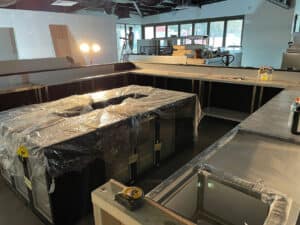
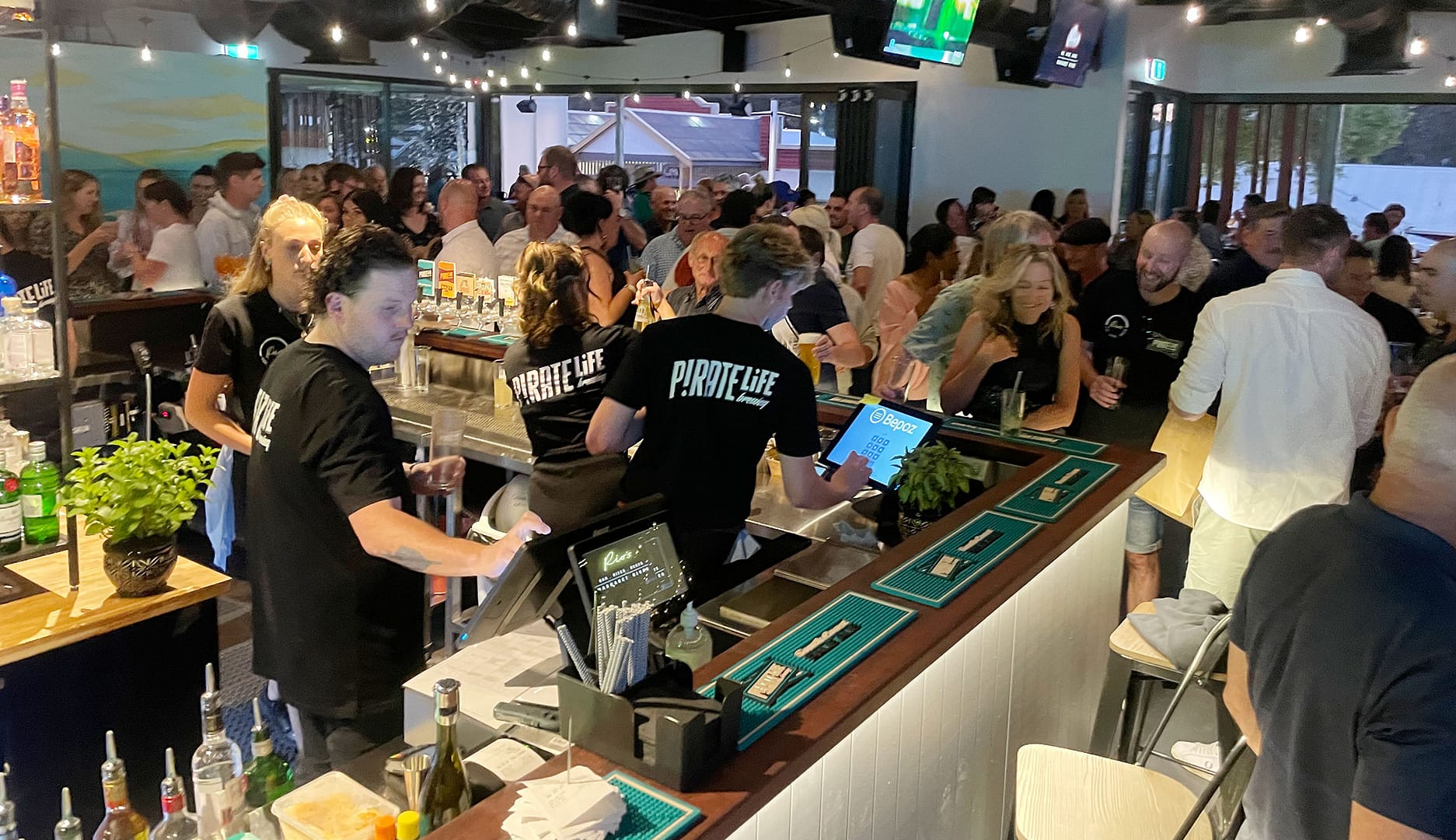
To best serve customers and create more space for them, the owners chose a u-shaped bar with the help of a selection of high-quality Brayco products. Brayco splashback benches and sink benches formed the base of the bar, before encasing it with a beautifully contrasting timber bar.


The splashback benches are industry standard, ready for all the pummelling of a pumping bar, and easy to assemble and clean. Rio’s fitted the timber bar over the splashback component for a seamless look, while underneath power points, taps and wiring were cut and concealed within the splashback. A Brayco rail kit was used to stabilise and reinforce the benches, while storing a well-used dishwasher.


Beyond the cocktail shakers’ post (aka the bar), the contemporary and industrial look of Rio’s continued with Chairforce supplying chairs, stools, and tables. Rio’s chose a selection of Replica Tolix items, inspired by French designer Pauchard, which are brilliant for commercial venues with their stackable and sturdy design. At Rio’s, you’ll see in the bar area Replica Tolix bar tables, with steel bases and solid timber tops, complemented by the lightweight and durable Replica Tolix bar stools with back rest. In the dining zones, the smaller Replica Tolix dining tables and Replica Tolix chairs create a seamless backdrop for the seafood platters and coconut margaritas adorning them.


Next time you’re lucky enough to explore our South West, make sure you pop in and experience the great space and menu at Rio’s Margaret River for yourself. If you’re looking for your own commercial venue fit out, come and visit our friendly staff at one of our warehouses across Australia – Call us now!

Posted on

Client Profile – Smokey Joes Rubs

Client Profile – Smokey Joes Rubs

Smokey Joe’s Rubs originated in the home kitchen of its passionate owner Joe two years ago. Joe loved preparing healthy food, full of flavour, and wanted all-natural spice mixes to transform his own meals. Like many good businesses, when you see a gap in the market, you create the product yourself!

So, Joe worked with local suppliers to source a vast array of herbs and spices that he personally dries, roasts, grinds and blends to create his award winning range of rubs and loaded salts. Two years in, Smokey Joe’s Rubs has expanded exponentially, and the old home kitchen was no longer cutting the mustard seed. The variety and volume of spices needed a bigger home due to the building clientele and a large selection of IGA supermarkets, butchers and BBQ stores across the country stocking the rubs.

Smokey Joe’s Rubs has now opened a beautiful shopfront with commercial kitchen at the back, at 306 The Strand in Dianella, WA which displays the full range of spices and loaded salts, plus a selection of sauces, dips and glazes.

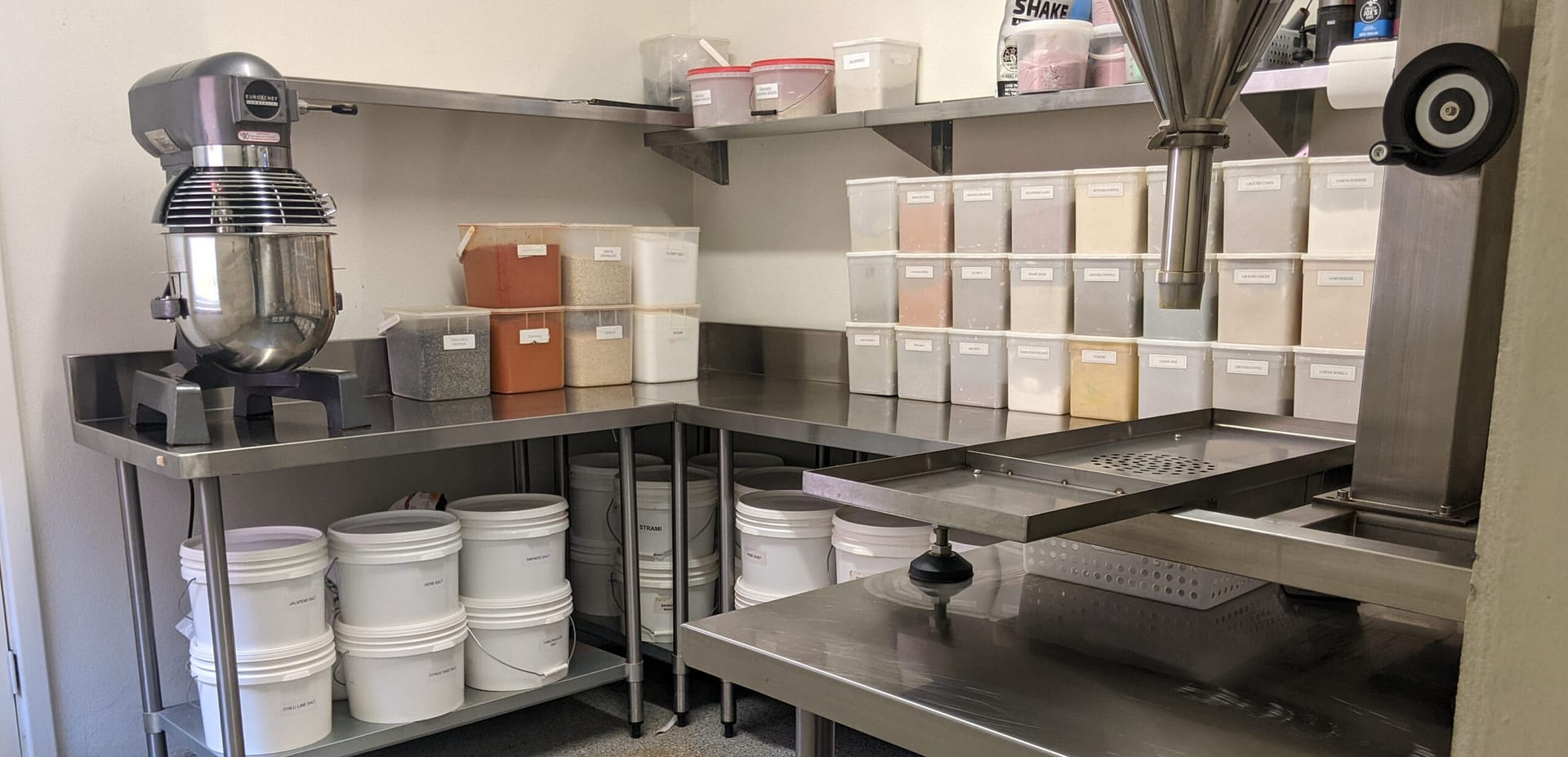
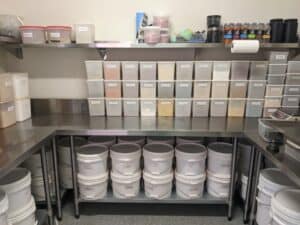
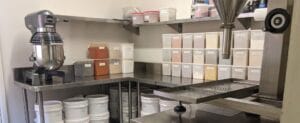
For his commercial kitchen, Joe came to Brayco to choose good quality, steel storage solutions to maximise the space and continue making the spices in small batches to maintain product integrity. Epoxy Wire Shelving was an ideal choice to store the myriad tubs of spices, which are a popular choice for kitchens due to the thick, sturdy steel supporting its four shelves (with the option for additional shelves).

Stainless steel flat benches are loaded up with further tubs of spices and the grinding machinery, perfect for commercial kitchens and ready for grinders to test their strength. Joe also selected some wall-mounted stainless steel shelves, positioned above the benches to keep items handy when working.

Brayco provided its expert advice on how to lay the shelves and benches out to maximise the space and Joe’s selection shows how well these products can support a busy, productive kitchen.

If you’re looking for help with good quality (and value) storage solutions for your commercial kitchen, contact us for a chat. Brayco has seven locations across Australia and New Zealand, stocked to the brim, so we can have products ready for dispatch or pick up within 24 hours of your order.

Posted on

Client Profile – Farooj Charcoal Chicken

Client Profile – Farooj Charcoal Chicken

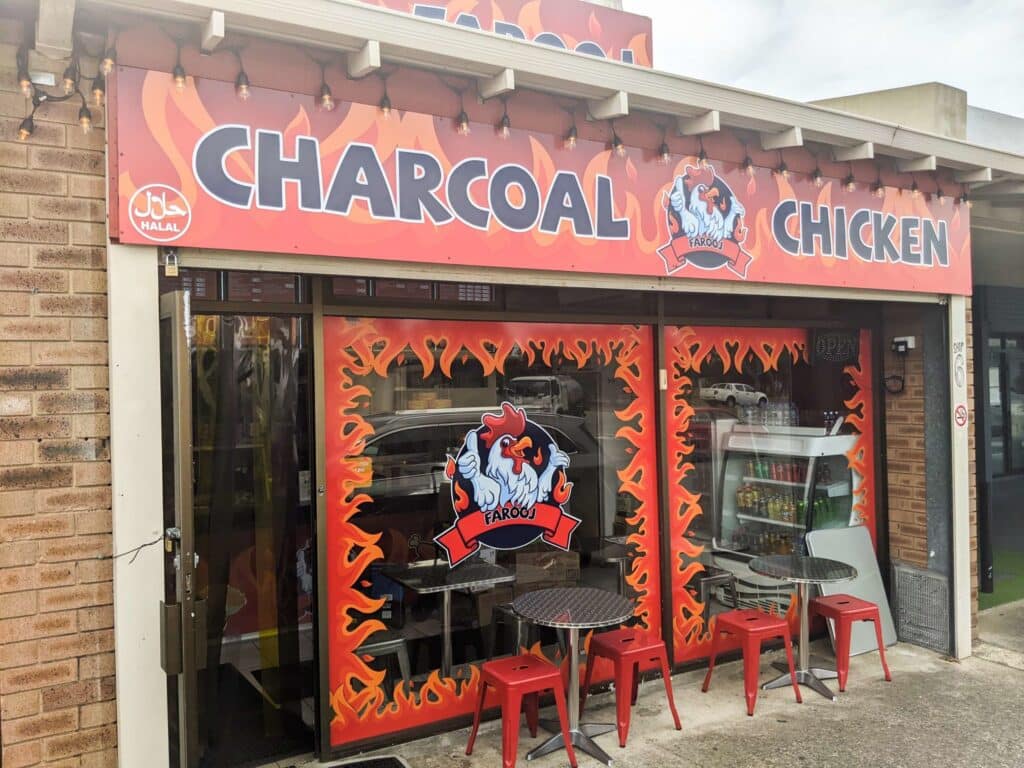
When a queue forms half an hour before doors open, you know the cuisine being served is something special. Langford’s Farooj Charcoal Chicken only opened in June 2022 but already draws crowds from far and wide for its mouth-watering Lebanese charcoal chicken recipe.

The family business was created when the owners moved to Perth and missed their unique charcoal chicken flavour – an old family recipe that was a favourite with anyone they cooked for. So, they decided to open Farooj Charcoal Chicken so the smoky, authentic flavours of Lebanese chicken could be enjoyed by their new community.

The shop is bursting with family-inspired recipes and family members, who cook and serve the charcoal chicken across various methods (think whole chickens, burgers, wraps and loaded fries), fresh from the spit roast. While customers are from all over Perth, the family particularly loves seeing its regular patrons.

Brayco and Chairforce were the supplier of choice for Farooj owners, who needed to maximise space in the small kitchen with plenty of sturdy and efficient storage, while providing its café section with a sleek, industrial look that aligned with its branding.

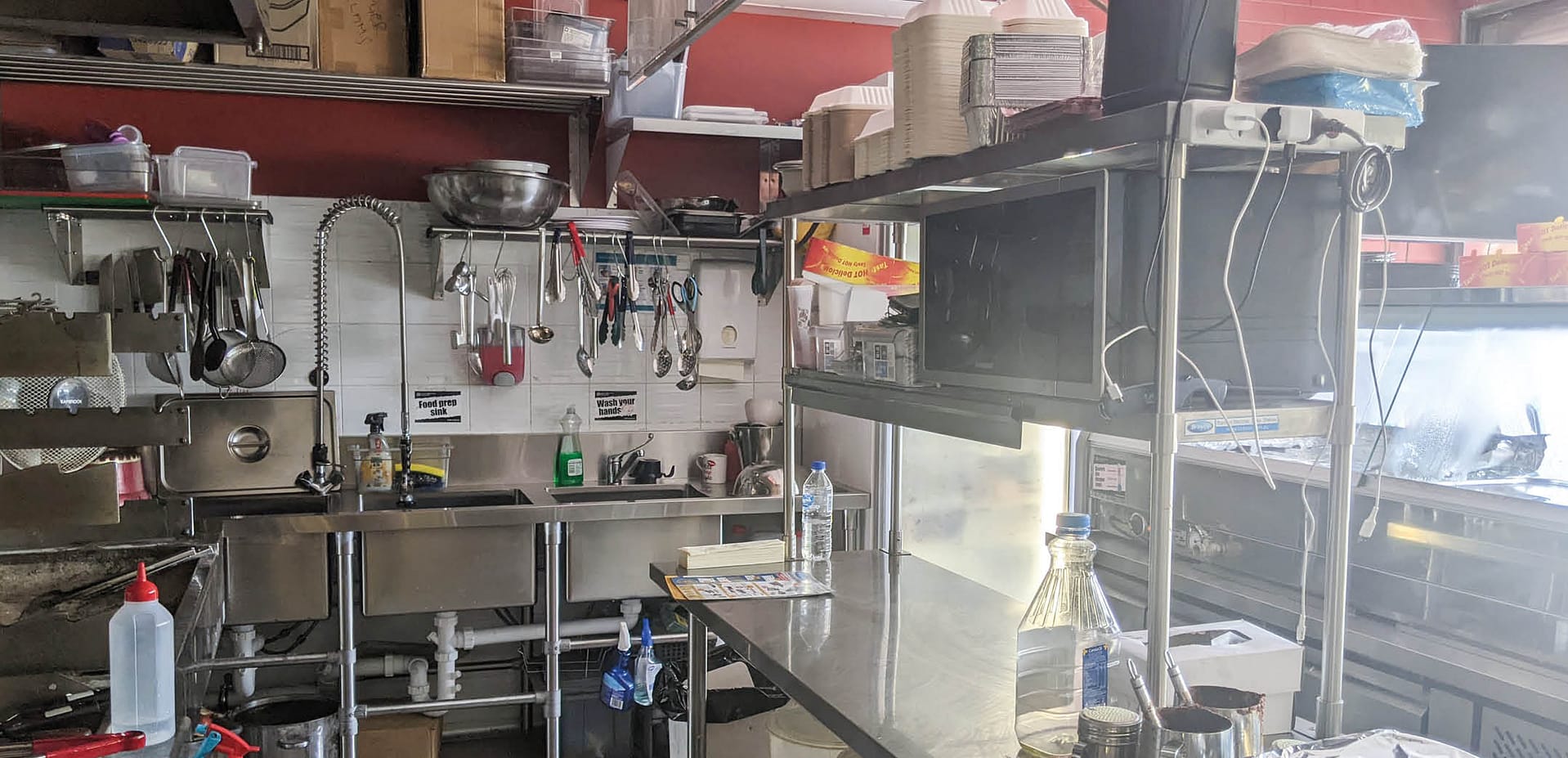
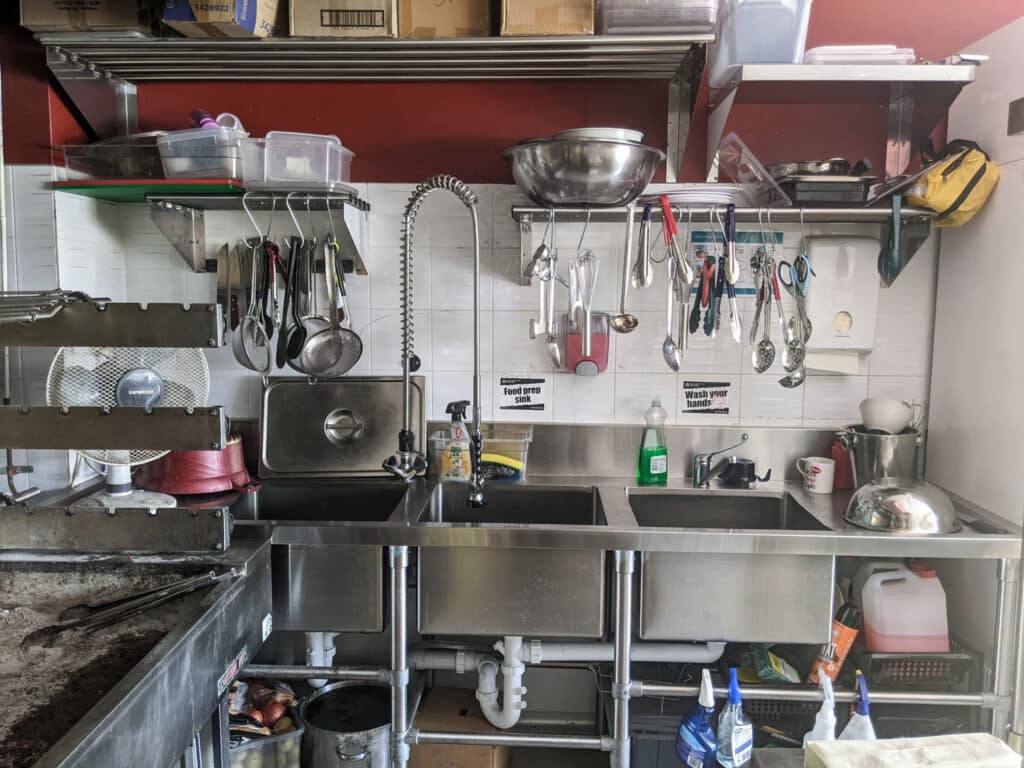
Farooj chose pipe shelves to line the kitchen above the triple bowl sink to keep utensils and pots easily accessible. Wall shelves tower above them with excess containers and products kept neatly out of the way until required. Brayco’s two tier overshelf is perhaps the hero of the kitchen, providing an island bench with space for both food preparation and storage, and everything within arm’s reach.

The triple bowl sink is well used within this fast-moving kitchen with options for rinsing food and washing dishes, plus a handy rail built beneath for efficient storage of spray bottles. Farooj chose two sinks with large, pre-rinse taps and one with a hands-free tap for hygienic hand washing.

The logo and shopfront are just as spicy as Farooj’s chicken with bold red flames dousing the windows. Farooj was able to perfectly complement its style with Chairforce’s red Replica Tolix stools (which come in a kaleidoscope of 11 colours, so palette matching is a cinch for any of our clients), plus they’re stackable for a fast pack away. The Miguel round and square folding dining tables are hygienic and lightweight, so they’re easy to clean between the constant flow of Farooj’s customers and fold up at closing time.

Brayco and Chairforce loved helping family business Farooj Charcoal Chicken create a harmonious workplace and enjoyable customer experience. Contact us to discuss how our products can elevate your business.

Posted on

Designing Your Commercial Kitchen

Designing Your Commercial Kitchen

The kitchen should be considered the heart of your restaurant or cafe. Factors that can determine the success of your restaurant/café, such as food quality, lead time and order efficiency rely heavily of the strategic design of your kitchen’s layout.

To optimise the flow of food production, commercial kitchens should not be using the same design principles of domestic kitchens, as they serve a completely different set of criteria.

Of the many fundamental aspects to consider when designing or refurbishing your commercial kitchen, we recommend first considering what your commercial kitchen will require. In most cases, you will need:

• Dry storage
• Refrigerated storage
• Freezer storage
• Food preparation station
• Designated cooking space
• Service area
• Dish pit/wash-up area

Helpful Tips

1. Research Local Health Codes

By obtaining the required permits for your food service operation, you’ll ensure your business has a firm foundation. Every state and local area has its own codes, so it’s best to familiarize yourself with them prior to designing your space. Topics such as ventilation, waste storage and lighting should be addressed in this stage of planning. A good starting point is the Australian Food Standards Code, which can be downloaded here. Alternately, you may enquire directly with your local public health department to find more information on applicable regulations for food service industries.

2. Know Your Menu

Creating processes to execute each dish will help shape your design in that it will determine which appliances and tools your kitchen requires. In this stage of planning, you can ensure your staff has ample counter space to work. For example, food preparation should be positioned between storage and the cooking area to achieve the ideal flow. When space permits, you should segregate preparation into different processes. Meaning, raw meat/fish prep, vegetable prep, poultry and desert will each have different preparation stations. Understanding the space and tools your kitchen requires will allow you to streamline food preparation processes. But if you find yourself in a tight situation and need help to create extra work space (most of us do), not to worry! Check out Brayco’s Stainless Steel Over Bench Shelves – .

3. Involve the Chef & BOH Staff

A haphazardly designed kitchen ultimately creates obstacles for your chef and back-of-house team. When possible, involve your team in the design process so their skills and expertise may be utilised. Input from the kitchen and BOH staff will help you determine the ideal placement of appliances and kitchen tools, therefore creating a smooth kitchen flow that will make your cooking and clean-up routines seamless.

Choosing Your Layout

Different layouts suit different types of restaurants. Here we’ll look at the suitability standards for each type.

Which Floor Plan is Best for Fast Food?

Fast food outlets work best with a centralised strip serving the assembly line. The assembly-line configuration is ideal for kitchens that need to serve a large quantity of people quickly. Under this model, kitchen equipment is situated in a line with the food preparation station at one end and the service station on the other, which encourages the quick production of food by sending it down the line. This layout works particularly well for restaurants with a limited menu, such as pizza or sandwich shops.

Which Floor Plan is Best for Catering Businesses?

Kitchens used to cater events generally have varied menus comprised of multiple courses. The zone-style layout typically works best. Under this blueprint, each station has its own space which allows BOH staff to divide and conquer. Restauranteurs can simply employ a specialized chef to tackle each station. Each workstation should have its own allocated area which usually requires a large and open working kitchen space, so this model does not suit small kitchens.

Café: Small spaces with few staff members benefit from an open design. An open kitchen layout allows your team to maximise a small space. An increasingly popular model consists of a glass partition between the service area and guest seating, which allows guests to see all the action. You can even create a chef’s table by placing bar stools by the kitchen. This gives your guests a unique and special experience while you are maximizing your venue’s potential. It’s no surprise that small spaces can be tricky to fit out, which is precisely why Brayco carries such a wide range of products in a large number of sizes, with speciality ranges to fit corners and the narrowest spaces.

Which Floor Plan is best for Large Restaurants? The island-style commercial kitchen layout features a central “command centre” or passthrough point for all dishes, which facilitates constant communication between the chef, cooks, and BOH staff. The island-style design is typically comprised of cooking equipment at its centre, while storage units, food prep and washing stations are located along its perimeter. This set up is ideally suited for restaurants with lots of kitchen space.

Where to buy Commercial Kitchen Furniture

Brayco supplies commercial kitchen benches, sinks, cabinets, shelving systems and much more. Products are supplied flat pack for easy delivery. Assembly is a breeze and sales staff are on hand to give advice if needed.

With over 450 products, Brayco is sure to have what you need, as most products come in a variety of shapes and sizes with many customisable to suit your requirements.

It’s not hard to understand why so many restauranteurs are opting for stainless steel cabinetry, countertops and accessories – it’s super sleek, ultra-hygienic and enhances the overall look of your kitchen.